caves · geology
Cave formations
How limestone caves form, and what the shapes on the walls are called.
Most of the caves we visit are in limestone. Slightly acidic water dissolves the rock. Some passages formed when they were full of water, and those are often rounded tubes. Others were cut later by a stream flowing with air above it, and those are often taller and narrower, like a canyon. That is why one part of a cave can feel round and the next can feel like a slot.
The deposits have ordinary names. A stalactite hangs from the ceiling: water dripping from the roof leaves calcite behind, and the shape grows downwards. A stalagmite grows upwards from the floor, where those drips land. If the two meet, they form a column. Flowstone is a sheet of the same mineral, left where water has run over a wall or floor instead of dripping from one point.
These deposits grow very slowly, often over hundreds or thousands of years. Mud and the oils on skin damage them, and they do not recover in any time that matters to a visit. We look at them. We do not touch them.
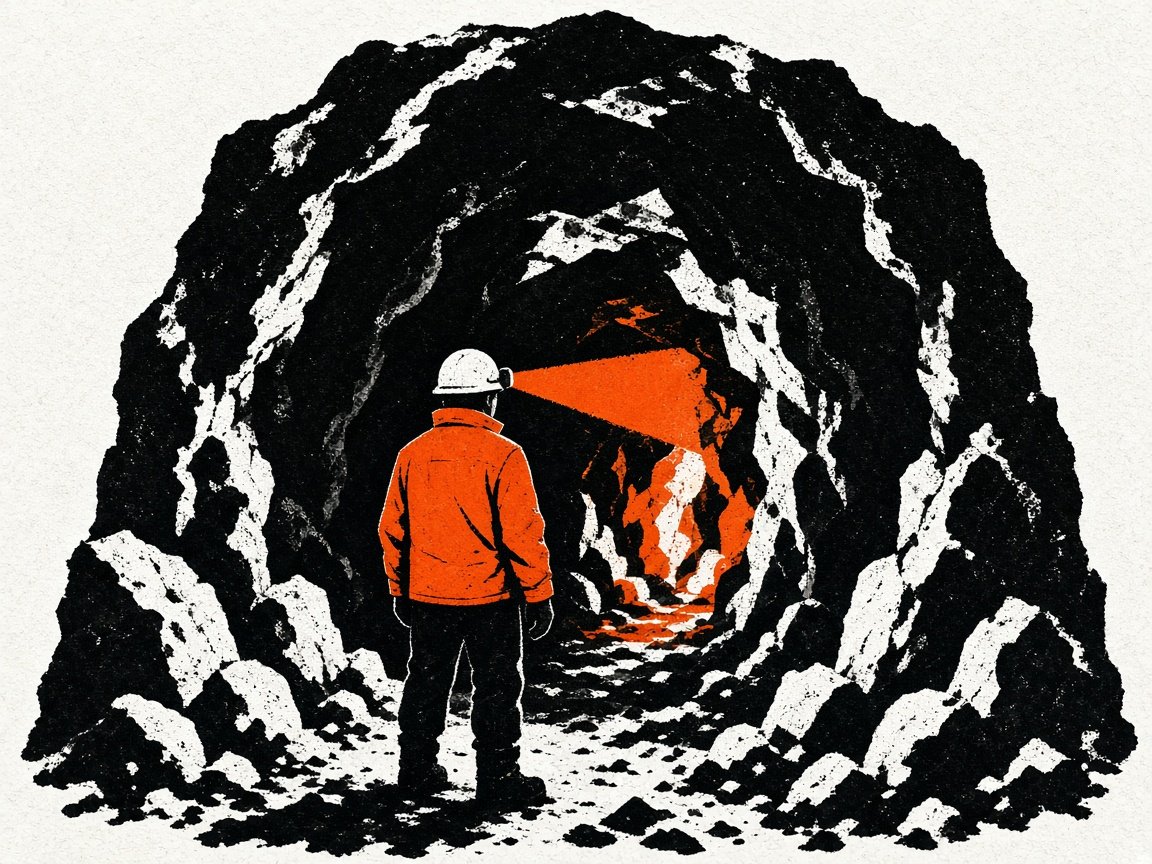
A mine is not a cave. Miners cut those passages for lead and other minerals. Old timber supports rot, and the ground can be unstable. A mine trip is led, with the right equipment. It is not a place to wander into.